The pattern as a protective mechanism
There are moments when it feels as if something inside us is making decisions on its own. We promise ourselves we will respond differently, choose better, stay calmer… and yet we find ourselves back in the same place.
What repeats does not always come from a lack of awareness. It often comes from automatic patterns that activate at a deeper level, responses that once served a purpose and continue to influence us quietly.
Even when you consciously want something different, your nervous system has a clear priority: protection. And it uses what it already knows. Sometimes, that means repeating emotional dynamics you rationally understand no longer serve you.
From neuroscience, we know the brain is designed for survival. When an experience is lived with emotional intensity, such as abandonment, criticism, instability, or excessive demand, the system learns how to adapt in order to stay safe, and over time, that adaptation becomes part of identity.
You may have learned to please others to avoid conflict, or perhaps to stay alert to prevent uncertainty, maybe to close emotionally to avoid being hurt again. And, at the time, these responses were intelligent. They helped you survive.
What feels familiar feels safe
The brain does not clearly distinguish between past and present. When a current situation resembles a previous experience, even slightly, the system activates the same pattern and it activates it because it is the response the system learned to associate with safety.
This is where many people feel frustrated and ask themselves: “I understand my pattern… so why do I keep repeating it?” Because understanding is not the same as transformation.
Patterns do not live only in rational thought. They exist as emotional and bodily circuits expressed through automatic reactions, physical sensations, and instinctive responses. That is why change does not happen through willpower alone.
Understanding is not the same as deactivating
Transforming a pattern requires creating new experiences that teach the system that it can respond differently without being in danger. When you begin to act differently, like setting boundaries, expressing emotions, or choosing from a new place, your system may interpret that change as a threat. Even when the change is healthy, it represents unfamiliar territory internally.
In those moments, self-sabotage, doubt, or a return to old behaviors may appear as the system’s attempt to return to what it knows and recognizes as safe. Real transformation begins when you can observe the pattern without judgment and recognize its protective intention.
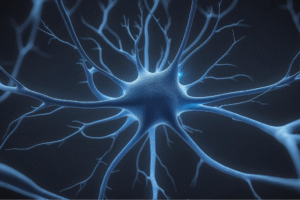
Instead of fighting it, you start creating small experiences where your body feels safe responding in a new way. This is where neuroplasticity comes in. Each time you choose a more conscious response, even a subtle one, you weaken the old circuit and strengthen a new one. The brain learns through repeated experience, especially when regulation and presence are involved.
Change means letting go of a version of yourself
Breaking a cycle means giving the past a new response from the present. Your patterns are not character flaws; instead, they are survival strategies that became automatic over time.
Letting go of them can feel like losing a version of yourself that once held you together. Even when necessary, that loss can create inner resistance. That is why deep change is built from inner safety.
How to begin breaking the cycle
As you develop presence and inner safety, a different question begins to emerge:
Is this reaction protecting me today… or simply keeping me in what is familiar?
That question marks the beginning of a new pathway because you are not condemned to repeat patterns indefinitely. True change begins when you understand the protective intention behind your pattern, and from there, step by step, you can teach your system that there is now another way to feel safe.